
Beyond Compliance: Beyonder’s eMobility Module Sets New Standards in Thermal Safety
Solving the Safety Equation: How Beyonder’s eMobility Module Neutralizes Thermal Propagation
In the battery industry, the greatest engineering challenge isn't just storing energy, it’s containing it. As the world transitions to high-power electric transport, safety is no longer a secondary feature; it is the most critical metric of quality.
We are proud to share that the Beyonder eMobility Module has successfully demonstrated its resilience in a series of rigorous thermal propagation tests. While the results were characterized by CATARC (China Automotive Technology & Research Center), the true story lies in our proactive approach to inducing and containing failure.
The Problem: The Chain Reaction Risk
The industry’s primary safety concern is Thermal Propagation (TP)—a domino effect where one failing cell triggers its neighbours, leading to an uncontrollable fire. Standard regulations often only require a 5-minute warning for occupants to flee. Beyonder’s goal is higher: total containment.
The Method: Proactive Stress Testing
To prove our "safety-by-design" philosophy, we used a proprietary internal procedure specifically engineered to force a total cell failure. While standard tests can sometimes be inconsistent, our method ensures that a Thermal Runaway (TR) event actually occurs, allowing us to prove that our module’s architecture can stop the fire before it starts.
1. Overcoming External Abuse (Heating Scheme)
The Stressor: We applied a 500W concentrated heat source directly to a "trigger" cell.
The Result: The trigger cell reached thermal runaway, but the energy remained isolated. Beyonder’s module design successfully prevented the heat transfer. CATARC characterized the outcome as zero propagation: No fire, no explosion.
2. Defeating System Malfunction (Overcharge Scheme)
The Stressor: We bypassed electrical safety limits to intentionally overcharge a cell within the module up to 40V until it reached thermal runaway, simulating a worst-case hardware or software malfunction.
The Result: Even under extreme electrical abuse, the module’s structural integrity held. The event was halted at the source, preventing a catastrophic chain reaction and protecting the surrounding environment.
Safety-by-Design: Why It Matters
For fleet operators, vehicle manufacturers, and maritime partners, this level of safety provides three distinct layers of protection:
Human Safety: We go beyond "warning time" to provide "containment," ensuring that a single-cell event never threatens the passenger cabin.
Asset Protection: By isolating the thermal runaway failure to one cell, we prevent the total loss of the battery pack and the vehicle, drastically reducing risk for insurers and operators.
Regulatory Leadership: Our performance aligns with the world’s first "zero-tolerance" fire safety standards, such as GB 38031-2025.
"Safety in the battery field is about managing the 'what-if' scenarios. By designing our own procedures to reliably induce thermal runaway and having the successful containment characterized by CATARC, we have proven that Beyonder technology is built to protect, even when the unthinkable happens." The Beyonder Engineering Team.
Technical Highlights:
Target Standard: GB 38031-2025 / CATARC Characterized
Module Type: High-Power eMobility (66 Ah / 3.4 kWh)
Safety Status: Zero Propagation | No Fire | No Explosion
Primary Applications: EVs, Maritime, and Industrial UPS
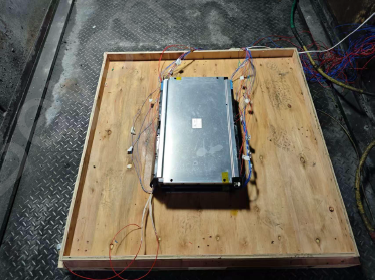
Figure 1 eMobility module subjected to thermal propagation (heating scheme) test - After test.
Interested in more details? Contact sales@beyonder.no